
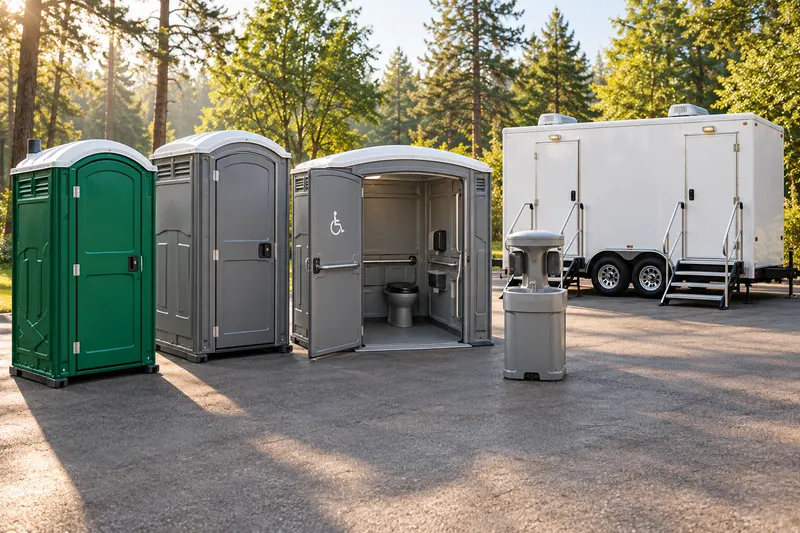
Choose functions for the occupied programme
Identify people, setup and clearing periods and usable fixed bathrooms. Compare standard toilets, accessible-use needs and supported washing for the gaps; ask about actual features if another format is proposed.
Have the provider and controller review ground, doors, waiting and user approach at the accepted position. Keep queues and barriers from making an accessible model unreachable once the programme starts.
Put the provider journey beside the public layout
For a public event, barriers can make a route appropriate for guests while closing it to the provider. Fort Myers distinguishes public-property event review and right-of-way closures. Coordinate the proposed restroom position with the actual closure and setup sequence rather than assume an approved event drawing settles supplier access.
Ask the City which current process applies to the proposed park, road or sidewalk use. Confirm the actual access arrangements with the operator; do not rely on an older filing interval as today’s requirement.
Describe which entrance the provider may use before barriers close, during any care visit and at recovery. A map that only shows the public entrance leaves those separate movements unresolved.
Use the reopening sequence to plan final recovery
Agree cleaning, waste, paper and washing-water, soap, drying and used-water tasks with the service route available during occupation. If a barrier plan changes, the authorised contact should have both position and care access reviewed.
Confirm when the route is safely available for collection and who can receive the provider after the public programme. The quote needs those transport and care conditions; event approval alone neither reserves equipment nor guarantees a particular visit.
Questions before you book
Does a right-of-way closure provide a delivery route?
Confirm the provider’s actual permitted route and timing through the event layout.
Should care be planned only after roads reopen?
Discuss the actual occupied need and supported access with the provider and operator; do not assume the event can omit necessary care.