
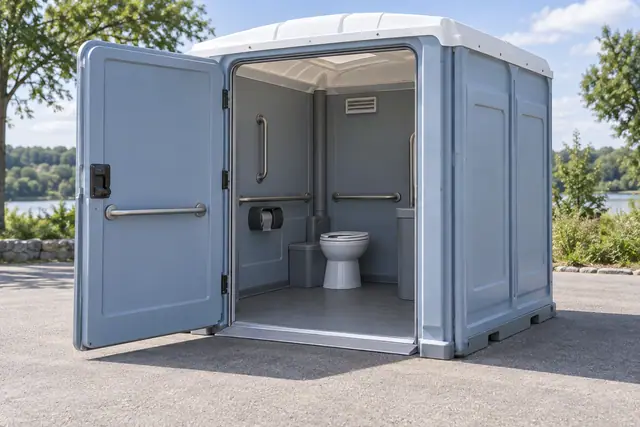
Describe the practical difficulty
A guest may be able to join an outdoor activity but still be unable to use the proposed bathroom. The useful question is where that journey stops working: the approach, entry, interior, controls or washing point. A larger-looking cabin alone does not answer it.
Explain relevant entry, turning, assistance or control-use needs without sharing private medical information. Ask for the offered model’s actual specification and review how it serves the intended users during the occupied period.
A common arrangement may work for the group. If one function remains unsuitable, identify it before automatically adding another unit. Toilet access and the ability to operate a washing station deserve separate answers.
Check the route in the occupied layout
Review the ground, approach and door space with the property controller and provider. Chairs, barriers or parked vehicles can change a route that appeared clear before setup. Keep waiting space from blocking the approach.
The provider also needs to handle and service the equipment at its accepted position. An accessibility symbol on a cabin does not certify the complete property, and a site sketch does not replace the necessary assessment.
Preserve usability throughout the rental
Include cleaning, waste service and paper, along with washing water, soap, drying and used-water care. Confirm who reports a blocked route or unusable function and who may request a change.
Ask the quote to identify the actual model, permitted position, occupied duration, delivery and collection. If the layout changes, have the resulting arrangement reviewed before relying on the earlier proposal.
Questions before you book
Is a wider cabin automatically sufficient?
The actual model and the surrounding route must serve the practical requirements; width alone does not settle entry, controls or washing.
Do I need to disclose a diagnosis?
Describe the relevant functional requirement. Private medical details are not needed for a practical equipment discussion.